

The pitch for cloud computing is always the same. Scale on demand. Pay only for what you use. Reduce overhead and stop worrying about infrastructure. It sounds clean, logical, and modern. And it’s exactly where most consultants stop talking.
What they don’t tell you is that your cloud bill rarely reflects what your business actually needs. It reflects how the system was built, how it was left, and how little accountability existed after the deployment was finished.
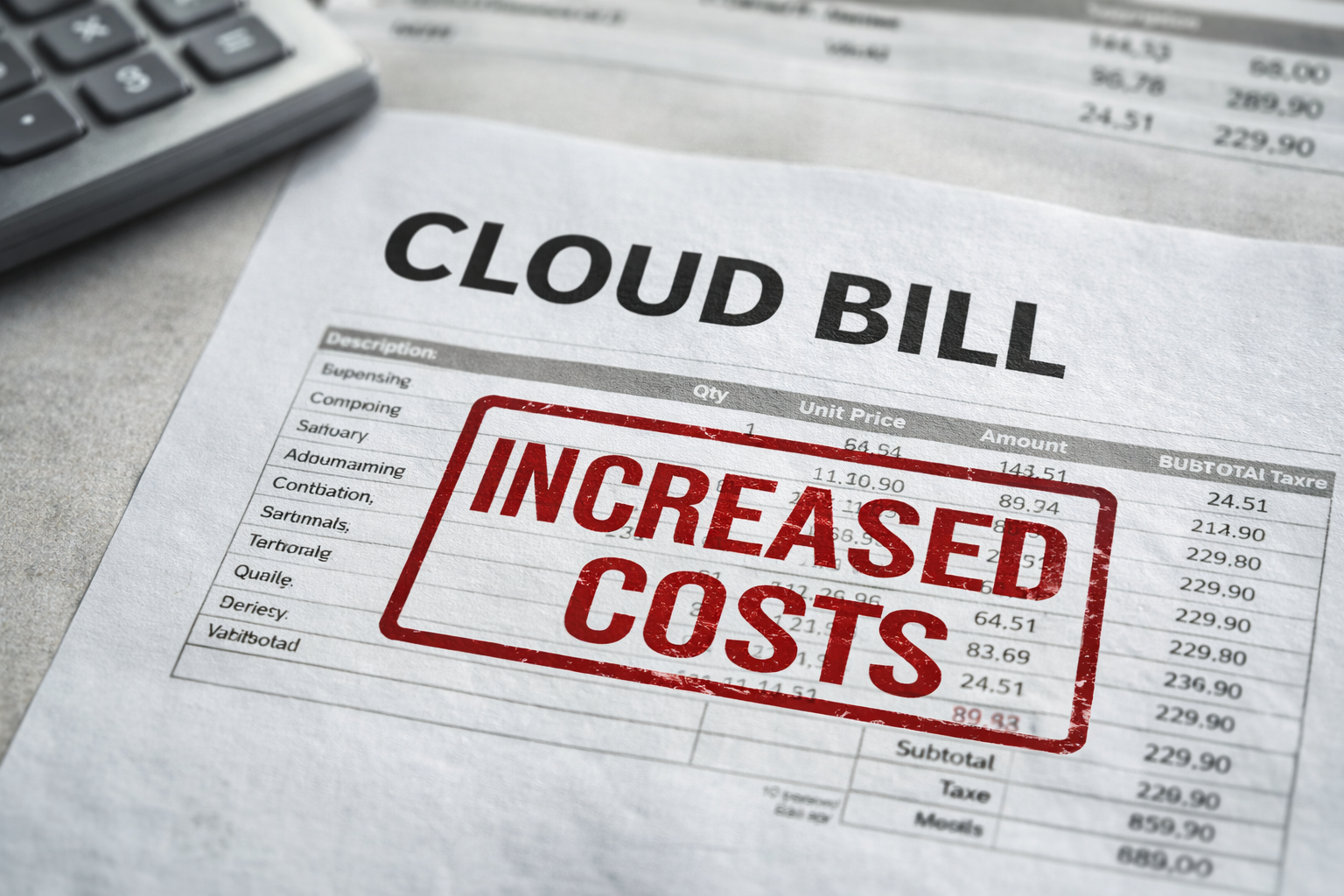
Most cloud environments don’t become expensive overnight. They become expensive slowly. A small service here. A convenience feature there. Logs retained “just in case.” A development environment that never gets shut down. None of it looks dangerous on its own, and because the costs are fragmented across dozens of line items, nobody feels the pain until the total crosses a line finance can’t ignore.
By then, the people who designed it are usually gone.
Cloud costs aren’t just about storage and compute. They’re about how often systems talk to each other, how data moves between regions, how frequently applications hit APIs, how long logs are retained, and how many services were spun up without a clear owner. Every one of those decisions compounds over time. Every shortcut becomes permanent overhead.

Free tiers are another quiet trap. They work exactly as advertised, right up until they don’t. Usage grows. Teams expand. Monitoring tools get added. Suddenly something that cost nothing for months is quietly charging hundreds of dollars a month. No alarms go off because the increase is spread across small charges that don’t look alarming in isolation. You pay it because it’s easier than untangling it.
Then there’s lock‑in. Convenience platforms make it easy to go all‑in quickly, but they make it hard to leave. Once your systems are built around a vendor’s tooling, data structures, and workflows, switching becomes a major project. Consultants rarely talk about this risk because many of them are rewarded for pushing you deeper into an ecosystem, not for keeping your options open.
The result is a cloud footprint nobody fully understands, nobody wants to touch, and nobody wants to be responsible for. Costs become background noise. Optimization becomes something you’ll “get to later.” Later rarely comes.
The fix isn’t exotic. It’s boring, disciplined work.
Treat cloud spend like any other recurring expense. Review it regularly. Ask what each service does, who owns it internally, and what would happen if it were turned off. Label resources so you can see where money is actually going. Separate production from experimentation. Make cost reviews part of normal operations instead of a reaction to sticker shock.
Most importantly, demand explanations in plain language. If someone can’t tell you why a service exists and what it costs in terms you can understand, that’s not sophistication. That’s risk.
The cloud isn’t broken. It’s just often built without ownership in mind. And when no one thinks like an owner, the bill always tells the story.